
M.Ed from KUK, Haryana | M.Ed Admission 2027-2028

Kurukshetra University, Haryana- Master of Education (M.Ed.) Regular*, Eligibility, Duration, Fee Structure, Syllabus & Registration
KUK M.Ed Admission 2027
Masters of Education is a post-graduate program for candidates seeking to seek after an expert vocation in the field of instruction. The span of this program is two years. The master’s of training acquaints one with the significant ideas of instructing, schooling and learning. It updates one information and plans capable educators.
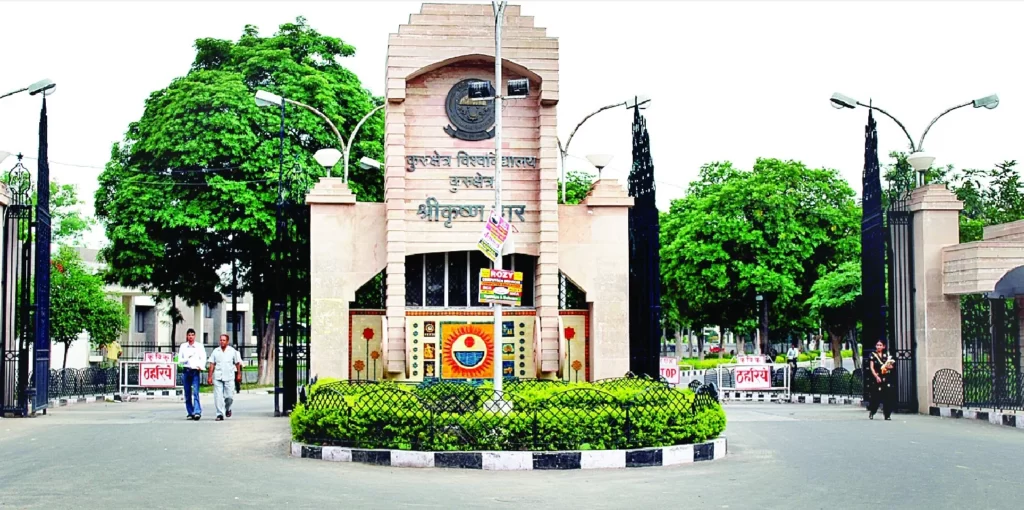
KUK(Kurukshetra University) is probably the best college in India. The instructive establishment is famous for its extraordinary foundation, amazing personnel and offices. The college is in presence beginning around 1956. From that point forward. The college has proceeded with its heritage to give quality training to its students.
Beneath referenced is the affirmation interaction, qualification models, prospectus and other significant data on M.ED confirmation 2024:
Useful Links
Qualification Criteria M.Ed Admission
- The candidates more likely than not finished B.ED, BA. Bed, BSC. BED, B. E. I. Ed with at least half stamps to seek after M.ED from KUK
- The candidates from SC/ST/OBC/PWD classification probably finished B.ED, BA. Bed, BSC. BED, B. E. I. Ed with at least 47.50% imprints to seek after M.ED from KUK
Note: The qualification standards might fluctuate at the hour of use subsequently, it is basic to completely look at them prior to applying for M.ED.
M.Ed Application Form
The candidates should finish up the affirmation structure accessible on the authority college site www.Kuk.ac.in. In the wake of visiting the site, one should explore through the course tabs and select M.Ed. The confirmation structure for a similar will be given on the site. Every one of the certified and qualified candidates need to finish up the web-based confirmation structure to sure admission to M.ED. The internet based application charge for M.ED is Rs. 600 for the overall classification and Rs. 150 for SC/ST/OBC candidates. The candidates should accept the printout of the M.ED application structure as well as important reports and present something similar to the affirmation office.
Post the confirmation of the reports, a receipt will be given to the candidate affirming the accommodation of their M.ED application structure.
At KUK, M.Ed affirmations are allowed based on marks acquired in the passing assessment. KUK conducts a typical entry test for qualified students. The entry test comprises of a progression of inquiries on themes like general mindfulness, schooling, showing methods, patterns in the instruction area and significantly more. A candidate should breeze through the placement test to tie down admission to KUK M.Ed.
Post the selection test, KUK will issue/show a rundown of students chose for the M.ED confirmation. The rundown of students is drafted based on the exhibition and scores of students in the placement test. The students who have come to the legitimacy rundown can now move further for a directing meeting to finish the confirmation cycle.
The directing meeting is the last advance in the confirmation cycle. The guiding meeting is directed by a board of master instructors having enormous information on the schooling field. An advising meeting is coordinated to comprehend the range of abilities of the student and recommend to them the suitable specialization. In light of the association during the directing meeting, students are distributed seats.
Highlights M.Ed Course
Lorem ipsum dolor sit amet, consectetur adipiscing elit. Ut elit tellus, luctus nec ullamcorper mattis, pulvinar dapibus leo.
Looking for information on M.Ed Admission 2027? Find out everything you need to know about M.Ed Admission, Eligibility, Fees and Registration here !
M.Ed Subjects and Syllabus
Following are the subjects and schedule of M.Ed.
(Note: This is the overall schedule, it might change contingent on the college or revisions in the course)
MEd Syllabus (Core/ Mandatory Subjects) | |
Semester – I | |
Educational Psychology | Historical and Political Perspectives of Education |
Educational Studies | Methodology of Educational Research & Educational Statistics |
Human Rights and Education | Information and Communication Technology in Education |
Semester – II | |
Philosophical Foundations of Education | Sociological Foundations of Education |
Curriculum Studies in Education | Teacher Education in Indian and Global Perspectives |
Semester – III | |
Advanced Methods in Educational Research | In-Service Teacher Education in India |
Comparative Education | – |
Semester – IV | |
(Only elective subjects mentioned below) | – |
MEd Syllabus (Specialised/ Elective Subjects) | |
Elementary Education in India: Administration and Management | Aspects, Planning & Management at Secondary & Senior Secondary level |
Issues & Curricular Concerns at the Elementary level | Issues & Curricular Concerns at the Secondary & Senior Secondary level |
Advanced Curriculum Theory | Environmental Education |
Policy, Planning and Financing of Education | Education Policy, Planning and Financing of Education at Secondary and Senior Secondary level |
Issues, Planning and Policies of Elementary Education | Education Management and Planning at the Secondary level |
Towards Academic Leadership at the Secondary School level | Information and Communication Technology in Education |
Inclusive Education | Peace Education |
Educational Technology | Issues and Challenges in Secondary Education |
Contemporary Concerns in Elementary Education | Educational, Vocational Guidance and Counselling |
Educational Administration | Supporting Education of Students from Disabilities and Disadvantaged Groups |
Value Education | Educational Evaluation |
Science Education | Language Education |
Social Science Education | Business Education |
Gender Studies | Yoga Education |
Special Education | Guidance & Counselling |
Profession and occupation possibilities after M.ED
Instruction is one of the quickest developing enterprises. There are umpteen work and vocation possibilities here. The candidate having ability, specialization and proper capability can gain admittance to the absolute best profession possibilities. After M.Ed one can gain admittance to promising position possibilities in different areas including public foundations, private establishments, distributing houses, schools, instruction consultancies, training focuses, innovative work, etc.
Some M.ED work profiles include:
- Teacher
- Career instructor
- Home guide
- Online guide
- Soft abilities educator
- Instructional technologist
- Educational head
- Curriculum Developer
M.Ed Course After Scope
Teacher Educator: Graduates can apply for teaching positions in B.Ed colleges and teacher training institutions, subject to applicable eligibility requirements.
Assistant Professor: Candidates can pursue opportunities in universities and colleges after meeting UGC, NCTE, and other relevant recruitment criteria.
Educational Administrator: M.Ed graduates can explore administrative and management roles in schools, colleges, and educational institutions.
Curriculum Developer: They can design educational programmes, learning materials, and teaching strategies.
Education Counsellor: Graduates can guide students regarding academic programmes, career opportunities, and educational planning.
Educational Researcher: Additionally, candidates can work on educational research projects, teaching methodologies, and education policies.
School Principal: Experienced professionals may qualify for school leadership positions after fulfilling the required teaching experience and recruitment criteria.
Ph.D in Education: Furthermore, students can pursue doctoral studies to build careers in advanced research and higher education.
M.Ed Course FAQs
Q1. What is an M.Ed course?
Answer: Master of Education (M.Ed) is a postgraduate degree programme designed for students who want to develop advanced knowledge of teaching, educational research, curriculum development, and educational administration.
Q2. What is the duration of the M.Ed course?
Answer: Generally, the M.Ed course duration is 2 years, divided into 4 semesters. However, students should check the latest course structure of their chosen university.
Q3. What are the eligibility criteria for M.Ed admission 2027–28?
Answer: Candidates generally need a B.Ed degree or another recognised equivalent qualification. Additionally, many universities require a minimum of 50% marks, while relaxation may apply to reserved categories according to university rules.
Q4. How can I apply for M.Ed admission 2027–28?
Answer: To apply for M.Ed admission, candidates must visit the official university admission portal, complete the application form, upload the required documents, and pay the application fee. Afterwards, they must participate in the applicable merit-based selection or entrance examination process.
Q5. Is an entrance examination compulsory for M.Ed admission?
Answer: Not necessarily. Some universities offer M.Ed admission based on merit, while others conduct entrance examinations. Therefore, candidates should check the admission guidelines of their preferred university.
Q6. What subjects are included in the M.Ed syllabus?
Answer: The M.Ed syllabus generally includes Educational Psychology, Research Methodology, Curriculum Studies, Educational Technology, Teacher Education, Educational Administration, and Dissertation or Research Work.
Q7. What career opportunities are available after completing an M.Ed?
Answer: After completing an M.Ed, graduates can explore careers as teacher educators, curriculum developers, educational researchers, academic coordinators, and educational administrators, subject to relevant recruitment requirements.
Q8. Can I pursue a Ph.D after completing an M.Ed?
Answer: Yes, M.Ed graduates can apply for a Ph.D in Education if they meet the eligibility requirements of the university. Moreover, doctoral studies can create opportunities in advanced educational research and higher education.
Q9. Is an M.Ed degree valid for government jobs?
Answer: Yes, an M.Ed degree from a recognised university can be accepted for relevant government education positions. However, candidates must also meet the specific qualifications, experience, and examination requirements of the advertised post.
Q10. What documents are required for M.Ed admission?
Answer: Generally, candidates need their B.Ed marksheets and degree, graduation certificates, Class 10 and 12 certificates, identity proof, passport-size photographs, and applicable category or migration certificates. Original documents may be required during verification.
Q11. Can I pursue an M.Ed course through distance education?
Answer: Distance or open-learning M.Ed options may be available under specific regulatory conditions. Therefore, students must verify the university’s current UGC-DEB and NCTE approvals, where applicable, before applying.
Q12. Why should I choose an M.Ed course in 2027–28?
Answer: An M.Ed course helps students strengthen their teaching knowledge, research skills, and educational leadership abilities. Furthermore, it can support career growth in teacher education, academic research, curriculum development, and educational management.


